Who is Reggi?
Reginald T. Gardner, Jr. is an independent game and media studies scholar whose work examines how games shape—and are shaped by—identity, community, labor, and culture. His research centers competitive gaming communities, particularly the fighting game community, and asks how diversity and representation are encouraged or constrained through media narratives, event infrastructures, and everyday participation.
Working primarily with qualitative methods, Gardner combines participant observation, visual ethnography, documentary analysis, interviews, and close play. His current projects examine representation within fighting game documentaries and tournaments, player participation during early access, and the ways games such as Cyberpunk 2077 and Final Fantasy XV represent care, identity, gender, and labor. Through The Independent Arcademic, he translates scholarly research into accessible essays, cultural criticism, and educational resources.
His interdisciplinary background spans political science, public administration, student affairs, and informatics. He holds a BA in Political Science, an MS in Student Affairs Administration, an MPA, and a Certificate in Community College Teaching from Binghamton University. He later pursued doctoral study in Informatics at the University of California, Irvine, where he developed an extensive qualitative research project on diversity and participation in competitive gaming communities. His experience in teaching, institutional governance, and public policy continues to inform his interest in power, community care, and equitable participation.

Why Games?
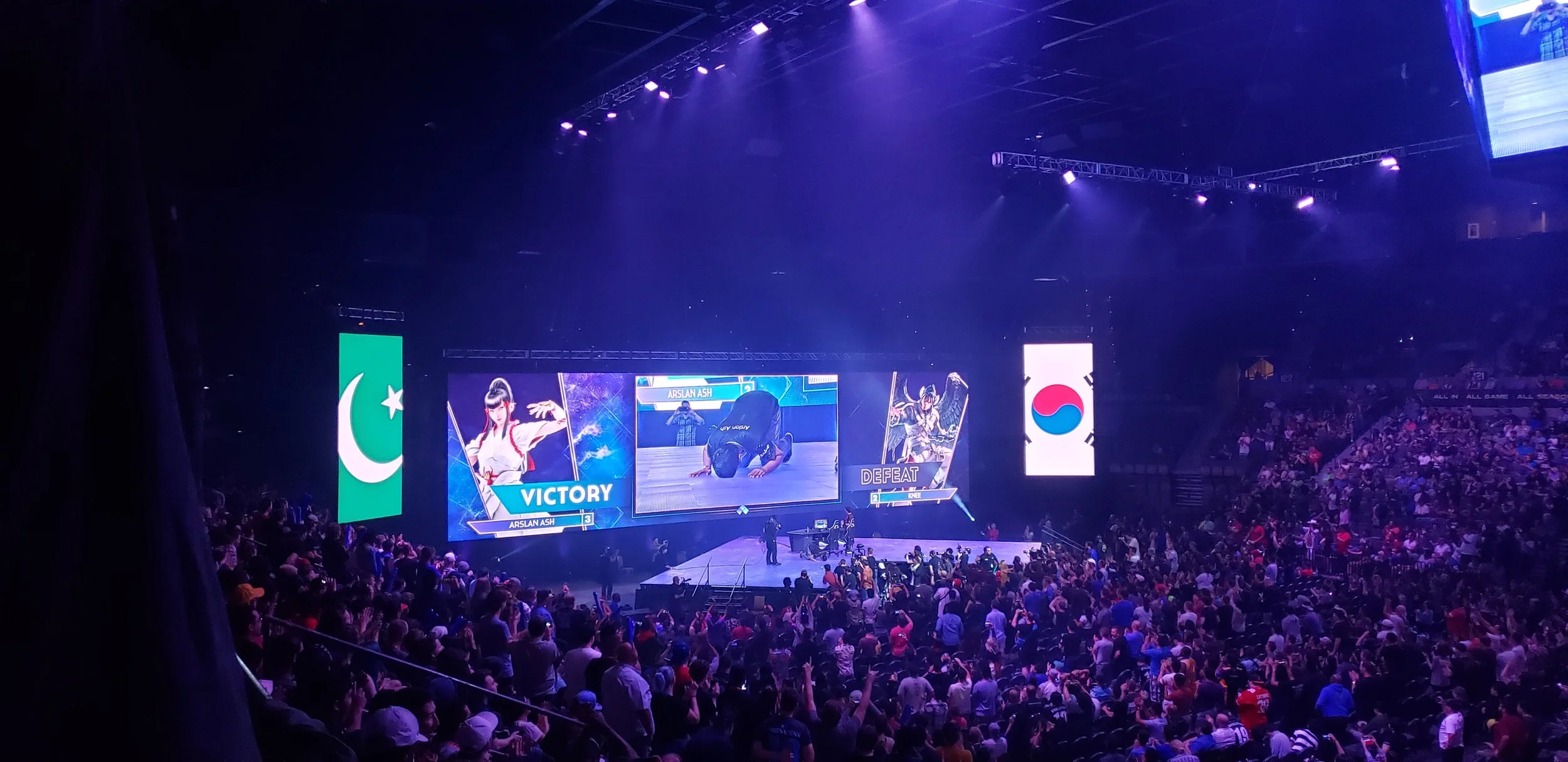
Reginald believes that gaming communities are created and sustained by the people who participate in them. His perspective emerges from occupying several positions at once: player, teacher, tournament volunteer, community organizer, and critic. Approximately five years supporting tournament brackets at EVO demonstrated how competition depends upon ordinary labor, shared norms, friendship, conflict, and care. These experiences continue to shape his commitment to communities in which different forms of participation and lived experience are recognized as meaningful.
I BELIEVE
IN PEOPLE
Reginald believes that play is both a cultural practice and a way of understanding the world. Games are not merely designed objects or temporary diversions; they provide spaces in which people experiment with identity, develop relationships, confront systems, and create shared meaning through action. By studying what people play, how they play, and what develops around that play, his work treats games as significant cultural forms worthy of rigorous analysis, sustained criticism, and genuine curiosity.
I BELIEVE
IN PLAY
Research Areas
Diversity, Representation, and Identity
Reginald examines how games and gaming cultures construct ideas about identity, difference, and belonging. His work considers both representation within games and the conditions under which diverse participants become visible within gaming communities. Rather than treating diversity as a matter of numerical inclusion alone, he investigates how media narratives, institutional hierarchies, event infrastructures, and everyday interactions shape whose experiences receive recognition and whose contributions remain peripheral.
Competitive Gaming Communities and Participatory Culture
Reginald studies competitive gaming communities as social worlds produced through participation, shared norms, institutional structures, and often-unrecognized labor. His research on the fighting game community examines tournaments not only as sites of competition, but as environments in which players, volunteers, organizers, spectators, and media creators collectively define what participation and belonging mean. He is particularly interested in the mundane practices and informal relationships that sustain these communities between their most visible moments.
Games, Media, and Cultural Meaning
Reginald uses close play, narrative analysis, and feminist cultural theory to examine how games organize experiences of care, labor, agency, and identity. His current writing considers subjects including relational survival in Cyberpunk 2077, gendered divisions of playable labor in Final Fantasy XV, and the relationship between player feedback and early-access development in Hades and Hades II. This work approaches games as cultural texts while remaining attentive to the distinctive meanings produced through player action.